
Marketing materials are often one of the first physical ways a customer interacts with a business. A business card handed over during a meeting, a brochure picked up at an event, a postcard received in the mail, or a flyer displayed in a local business can all influence how people remember a company. While businesses spend a great deal of time updating websites, social media profiles, and digital advertising campaigns, printed materials are sometimes left unchanged for years. The problem is that a marketing piece can continue to look attractive while the information, branding, or message behind it has already become outdated.
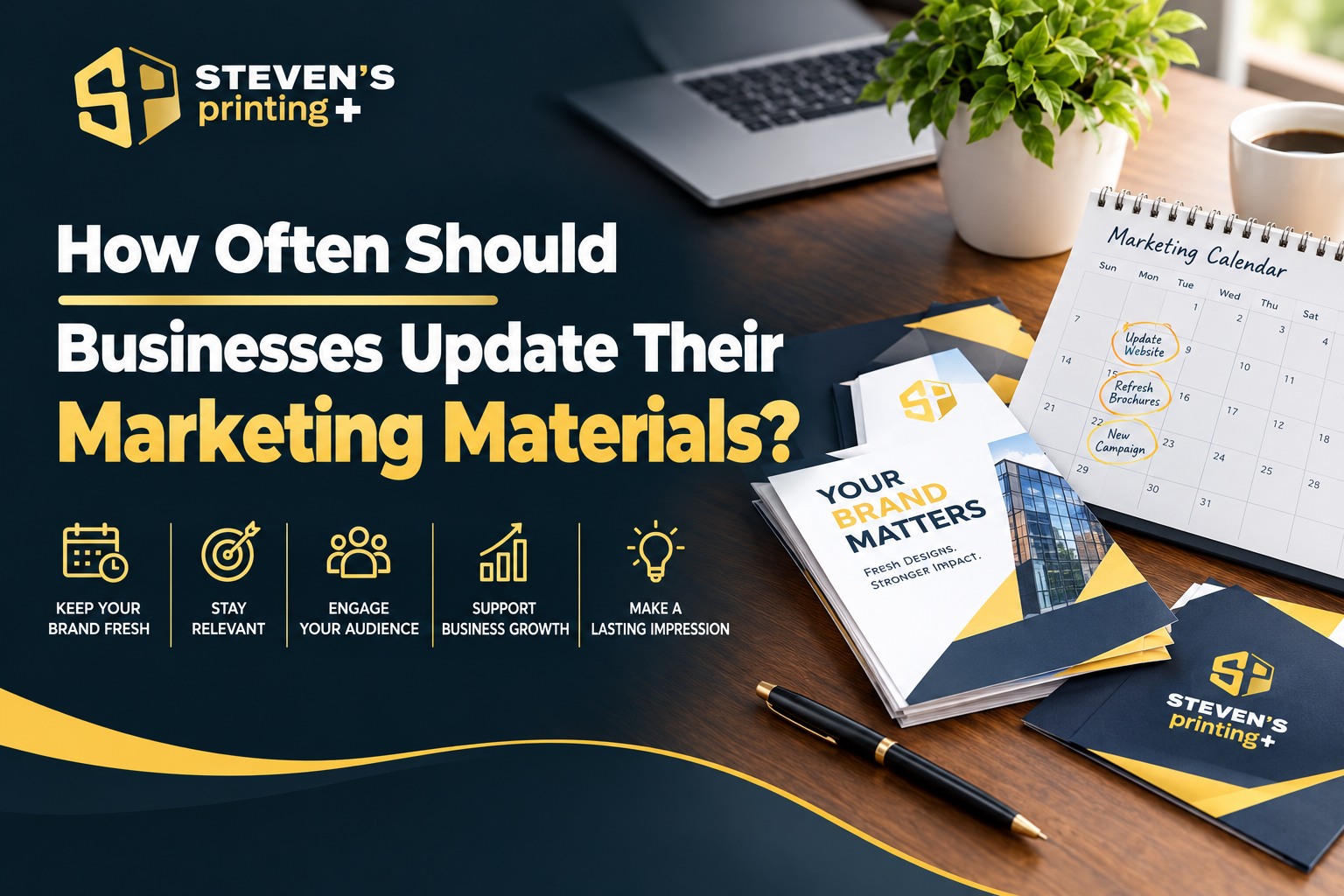
So, how often should businesses update their marketing materials? The answer depends on the type of material, how often it is used, how quickly the business changes, and whether the information printed on it is still relevant. Some materials may need to be reviewed every few months, while others can remain effective for several years. Rather than following a strict calendar, businesses should make regular reviews part of their overall marketing strategy and update materials whenever there is a meaningful change.
Start With an Annual Marketing Materials Review
For most businesses, conducting a complete review at least once a year is a practical place to start. An annual review gives a company the opportunity to look at everything it currently uses for marketing and decide whether each piece still represents the business accurately.
This review should include business cards, brochures, flyers, postcards, catalogs, presentation folders, direct-mail pieces, menus, event materials, signage, and other printed items that customers or prospects may see. Businesses should check phone numbers, email addresses, website URLs, physical addresses, employee information, service descriptions, pricing, photographs, logos, and promotional messages.
Even a small error can create an unnecessary problem. A brochure that lists an old phone number or a business card with an outdated website address can make customers question whether the company is still active or paying attention to important details. Regularly reviewing Professional Printing Services materials helps businesses avoid these issues while keeping their physical brand presence consistent with their digital channels.
Update Printed Materials When Your Brand Changes
A major branding change is one of the clearest reasons to update printed materials. If a company changes its logo, colors, typography, slogan, business name, or overall visual identity, continuing to use old materials can create confusion.
Imagine a customer visits a company’s website and sees a modern new logo, but the salesperson hands them a business card featuring the company’s old branding. Neither piece may be individually bad, but together they create an inconsistent experience.
Brand consistency matters because customers should be able to recognize a company regardless of where they encounter it. When a rebrand takes place, businesses should review their existing materials and determine which pieces need to be redesigned or replaced.
This is also an opportunity to reconsider whether older materials still communicate what the company does today. A business may have expanded its services, changed its target audience, or developed a completely different positioning since its previous materials were created.
Business Cards Should Be Updated When Information Changes
Business cards typically do not need a complete redesign every year, especially when a company’s branding remains consistent. However, they should be updated whenever the information on them changes.
Employees may change positions, sales representatives may leave the company, phone numbers may change, or a business may move to a new location. Continuing to distribute cards with incorrect information is not only inconvenient but can also make the business appear less organized.
For companies with frequent staff changes, ordering smaller quantities can be more practical than printing thousands of cards at once. Although larger print runs can sometimes lower the cost per card, that savings disappears when a business has to throw away a large supply because someone’s information has changed.
Brochures Should Reflect Your Current Business
Brochures often have a longer lifespan than promotional flyers because they usually provide more general information about a company, its services, or its products. However, that does not mean they should be left untouched indefinitely.
Businesses should review brochures whenever their services, products, pricing, locations, or customer base changes. If a company introduces a new service but its brochure still focuses entirely on older offerings, the material is no longer doing its job.
The same principle applies to photographs and statistics. Images that no longer represent the business, outdated customer numbers, old awards, or expired claims should be replaced.
Using Commercial Printing Services for updated brochures can help a business maintain a professional presentation while making sure customers receive information that reflects the company’s current offerings.
Promotional Materials May Need More Frequent Updates
Promotional materials generally have a shorter lifespan because they are often connected to specific campaigns, offers, events, or seasons. A restaurant might create a flyer for a holiday promotion, while a retail business may print postcards for a seasonal sale. A service provider might create a campaign around a newly launched service.
These materials should be updated whenever the promotion changes. There is little value in keeping hundreds of flyers that advertise an offer that expired months ago.
Businesses should also avoid printing more promotional pieces than they realistically expect to use. While ordering in larger quantities can be economical, overprinting temporary materials can create unnecessary waste and storage problems.
For campaign-based marketing, Custom Printing Services can give businesses the flexibility to create materials that are specifically designed around a particular promotion, audience, or event.
Pay Attention to Your Target Audience
Marketing materials should also evolve as a business’s audience changes. A company that originally focused on individual consumers may eventually begin working primarily with corporate clients, or a local business may expand into regional or national markets.
When the target audience changes, the messaging and design may need to change as well.
For example, a company selling premium professional services may want materials that communicate reliability, expertise, and quality, while a business targeting families may choose a more approachable visual style. The same company can also have different materials for different audiences as long as its overall brand identity remains consistent.
This is particularly important for Corporate Printing Services, where printed pieces may be used during sales meetings, conferences, networking events, and other professional settings where first impressions matter.
Don’t Ignore the Quality of Your Printed Materials
Updating marketing materials is not simply about changing the words. Businesses should also consider whether the physical quality of their materials still matches the image they want to present.
A worn-out business card, faded brochure, poorly printed photograph, or low-quality flyer can make a company appear less professional than it actually is. Customers may not consciously analyze the paper stock or printing quality, but they can still form an impression based on the overall presentation.
Branded Marketing Materials should feel like a natural extension of the company’s identity. The design, paper, images, typography, and finish should work together to communicate the right message.
Investing in High Quality Printing can be especially important for businesses that operate in competitive industries where customers are comparing several companies before deciding who to contact.
Consider Updating Materials After a Major Business Change
Businesses should not wait for their annual review if something important changes during the year. Marketing materials should be updated whenever there is a major development that affects the information customers receive.
Some common examples include:
- Moving to a new office or location
- Changing phone numbers or email addresses
- Launching new products or services
- Discontinuing an existing service
- Changing business hours
- Updating pricing
- Expanding into a new market
- Changing company leadership
- Completing a rebrand
- Adding new certifications or awards
- Changing the company’s target audience
These changes do not always require a completely new design. Sometimes replacing a small amount of information is enough. The important thing is to make sure Printed Marketing Materials do not contradict what customers see on the company’s website or hear from its sales team.
Make Your Marketing Materials Work Together
Another useful approach is to look at all marketing materials as part of one larger system rather than treating every printed piece separately.
Business cards, brochures, postcards, flyers, folders, signs, and other materials should have a recognizable connection through consistent branding and messaging. When customers see the same visual identity across multiple touchpoints, it becomes easier for them to remember the business.
This is where Marketing Print Materials can support a broader marketing strategy instead of simply serving as individual pieces of paper. Each item should have a clear purpose, whether that purpose is generating leads, explaining services, promoting an offer, supporting a sales conversation, or helping customers remember the company after an event.
Track What You Actually Use
Businesses should also pay attention to which materials are being used and which ones are simply sitting in storage.
If sales representatives regularly run out of a particular brochure, that may indicate the material is useful and should be kept current. On the other hand, if thousands of flyers have been sitting unused for months, it may be time to reconsider their design, message, distribution strategy, or overall purpose.
The goal of Print Marketing Materials should not simply be to produce something attractive. Every printed piece should have a reason for existing and should contribute to a larger business objective.
This mindset can also help businesses control printing costs because they can focus their budget on materials that customers actually respond to.
Keep Seasonal Campaigns Fresh
Seasonal marketing is another area where businesses may need to update materials more frequently. Holidays, annual events, sales seasons, trade shows, and local events can all provide opportunities to create timely campaigns.
A seasonal campaign can feel much more relevant when the design, offer, imagery, and message are connected to the occasion. However, businesses should make sure that temporary campaigns are clearly separated from their long-term brand materials so that customers do not confuse a limited-time promotion with an ongoing service.
Promotional Printing Services can be useful for these short-term campaigns because businesses can create pieces specifically for an event, promotion, or season without changing their entire collection of permanent marketing materials.
Create a Simple Update Schedule
Businesses do not need a complicated system to keep their marketing materials current. A simple schedule can make a significant difference.
Start by conducting a complete review once a year. Then, whenever the business experiences a major change, immediately check which materials are affected. Companies can also review frequently used materials every few months to make sure they are still accurate and producing the desired results.
The same approach can be applied to Professional Marketing Materials used by sales teams, customer service representatives, and business development departments. Keeping these materials current ensures that employees have the right information when communicating with customers.
The Right Time to Update Is When Your Business Changes
There is no universal rule that says every business must redesign its marketing materials every six months or every year. Some companies may need new materials several times a year, while others may only need significant updates every few years.
What matters most is relevance.
If your contact information is wrong, update it immediately. If your company has rebranded, update your materials as part of the rebrand. If your services have changed, make sure your brochures and promotional pieces reflect those changes. If your materials look noticeably outdated, consider refreshing their design.
Using Custom Business Printing solutions can help businesses create materials that fit their current needs instead of relying on one-size-fits-all designs.
Ultimately, Printed Business Materials should accurately represent the company customers are dealing with today, not the company it was several years ago. Regular reviews, timely updates, consistent branding, and thoughtful printing choices can help businesses make a stronger impression while avoiding the cost and confusion associated with outdated information.
The best marketing materials are not necessarily the newest ones. They are the ones that remain accurate, useful, professional, and aligned with the business’s current goals. By reviewing printed materials regularly and updating them when circumstances change, businesses can make sure every physical interaction continues to support their brand and build customer confidence.