
Images can now be created in seconds. Documents can be written with a simple prompt. Marketing campaigns can be automated, customer data can be analyzed almost instantly, and digital content can be distributed to millions of people without producing a single physical object.
It would be easy to look at this transformation and assume that industries built around physical communication are becoming less important.
The printing industry tells a different story.
Print has survived the arrival of radio, television, computers, the internet, smartphones, social media, and now artificial intelligence. Each technological shift has changed the role of printing, but none has eliminated the fundamental need for physical communication.
What has changed is not whether print matters.
It is how print creates value.
Print Is No Longer Competing With Digital
One of the biggest mistakes businesses can make is treating print and digital communication as opposing forces.
They are not.
The strongest marketing strategies increasingly combine both.
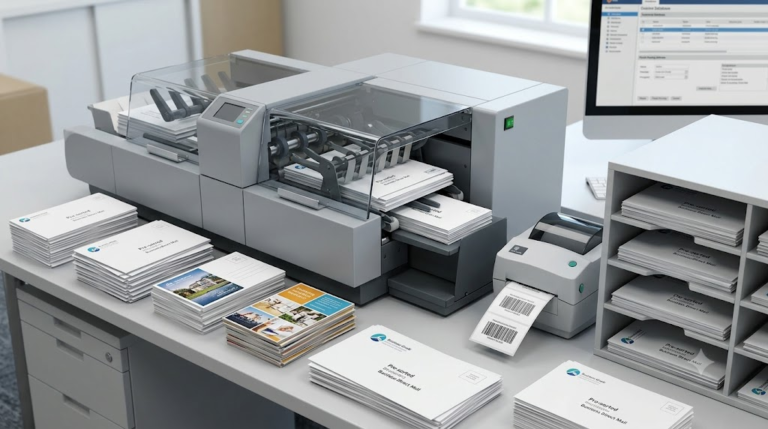
A printed postcard can direct someone to a website through a QR code. A product catalog can connect customers to an online store. A trade show display can reinforce a digital campaign. A direct mail campaign can be personalized using customer data collected through digital interactions.
The physical and digital worlds are becoming increasingly connected.
That creates an interesting opportunity for the printing industry. Instead of trying to compete with every new digital technology, printers can use those technologies to make physical communication more effective.
AI is a particularly powerful example.
AI Is Changing Printing, Not Replacing It
Artificial intelligence is already influencing the way businesses approach design, marketing, personalization, data analysis, and content creation.
For printers, that creates both challenges and opportunities.
AI can help businesses understand customer preferences, identify audience segments, generate creative concepts, analyze campaign performance, and automate repetitive processes. When those capabilities are combined with modern printing technology, businesses can produce more targeted and sophisticated physical communications.
A single campaign does not necessarily have to look identical for every recipient.
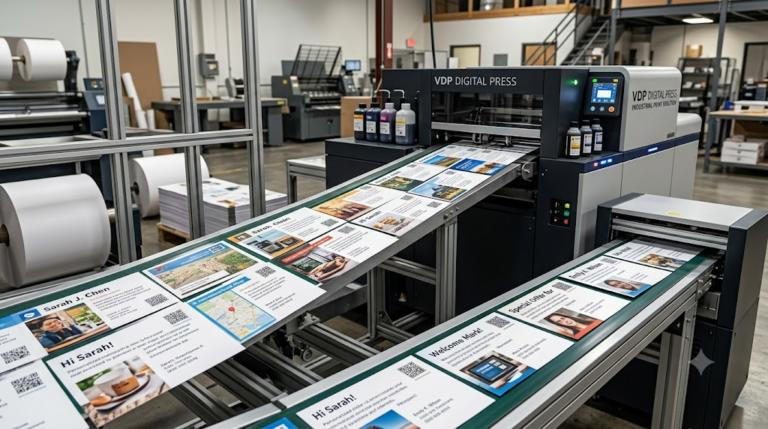
Different customers can receive different offers. Different locations can receive different messaging. Images and content can be adapted to specific audiences. Campaigns can be produced with greater precision while maintaining the efficiency required for large-scale production.
This is an important shift.
The future of printing is not about resisting artificial intelligence.
It is about using it intelligently.
Technology should make printing more relevant, more efficient, and more responsive to what customers actually need.
Why People Still Value Something They Can Hold
There is something fundamentally different about physical communication.
A digital message exists on a screen and can disappear with a swipe. A printed piece occupies physical space. It can sit on a desk, remain on a refrigerator, be passed between people, or become part of someone’s daily environment.
That physical presence matters.
Consider a business card exchanged during a meeting. A printed invitation sent for an important event. A beautifully produced brochure handed to a potential customer. A branded package arriving at someone’s home.
These experiences involve more than simply receiving information.
They involve a physical interaction.
That interaction can make communication feel more intentional and memorable. In an environment where consumers are surrounded by digital messages throughout the day, something tangible can sometimes feel surprisingly personal.
This does not mean every printed piece is automatically effective. Poor design, irrelevant messaging, and low-quality production can still be ignored.
The point is that physical communication has qualities that digital communication cannot completely reproduce.
The Industry Has to Adapt
The survival of printing does not mean the industry can remain unchanged.
Quite the opposite.
Printing businesses today face a customer base that expects speed, customization, consistency, sustainability, and technology-driven efficiency. Customers want more than someone who can put ink on paper. They want partners who understand communication.
That requires continuous adaptation.
Modern printing businesses need to understand digital marketing, data, automation, personalization, design technology, online ordering, customer expectations, and emerging production methods. They need to understand how print fits into a broader marketing strategy rather than treating each printed product as an isolated transaction.
The industry is evolving from production toward problem-solving.
That may be one of the most important changes of all.
Personalization Is Becoming the New Standard
Consumers have become accustomed to personalized experiences.
Streaming platforms recommend content based on viewing habits. Online stores suggest products based on previous activity. Digital advertising can be targeted toward highly specific audiences.
As a result, generic communication increasingly feels less useful.
Print is adapting to the same expectation.
Modern variable data and digital printing technologies allow organizations to personalize printed communications at scale. Names, images, offers, messaging, and other elements can be customized based on available customer information.
That means print can become more targeted without losing its physical advantages.
A printed campaign can be personal.
A catalog can be relevant.
A direct mail piece can be tailored.
A promotional product can be designed around a particular audience.
This combination of physical presence and digital intelligence is one of the reasons print continues to have a place in modern marketing.
Sustainability Will Shape the Next Generation of Printing
Adaptation also means responding to environmental expectations.
Businesses and consumers are paying greater attention to the materials they use, the waste they generate, and the lifecycle of physical products. The printing industry cannot ignore that conversation.
Sustainable practices, responsible material choices, efficient production, recycling, and waste reduction are becoming increasingly important considerations.
The future will not simply belong to printers that can produce high-quality work.
It will belong to businesses that can produce it responsibly.
That shift may also encourage greater creativity. Reusable displays, recyclable materials, efficient production methods, and smarter print quantities can help businesses reduce waste while still achieving their communication goals.
Sustainability is becoming part of the value proposition rather than an optional extra.
The Human Element Still Matters
Perhaps the most interesting thing about the AI era is that it may make human connection more valuable, not less.
When almost anyone can generate an image, write an article, create a presentation, or produce a marketing concept with AI, originality and authenticity become harder to distinguish.
Physical experiences can provide an important counterbalance.
A thoughtfully designed invitation.
A beautifully printed book.
A carefully produced package.
A memorable event display.
A handwritten note included with a printed communication.
These experiences remind people that communication is not only about information. It is also about how information makes someone feel.
Technology can help create those experiences, but technology does not replace the need for thoughtful communication.
The Future of Printing Is About Evolution
The printing industry has already survived several technological revolutions.
It survived television.
It survived desktop publishing.
It survived the internet.
It survived smartphones and social media.
Now it is adapting to artificial intelligence.
The lesson from history is not that printing remains unchanged. It is that printing survives by changing.
The industry continues to evolve because the underlying need has never disappeared. Businesses still need to communicate. Organizations still need to inform people. Brands still need to be remembered. Customers still appreciate tangible experiences.
The tools may change, but those human needs remain remarkably consistent.
AI will undoubtedly transform the printing industry. It will change how campaigns are planned, how designs are created, how customer data is used, and how production is managed. Some traditional processes will disappear, while entirely new opportunities will emerge.
That is not a threat to the future of print.
It is an invitation to redefine it.
The printing businesses that embrace new technology while preserving the qualities that make physical communication valuable will be the ones best positioned for what comes next.
Because the future of printing is not about choosing between paper and technology.
It is about bringing the two together—and understanding that even in an increasingly artificial world, people still value something real they can see, touch, keep, and remember.