

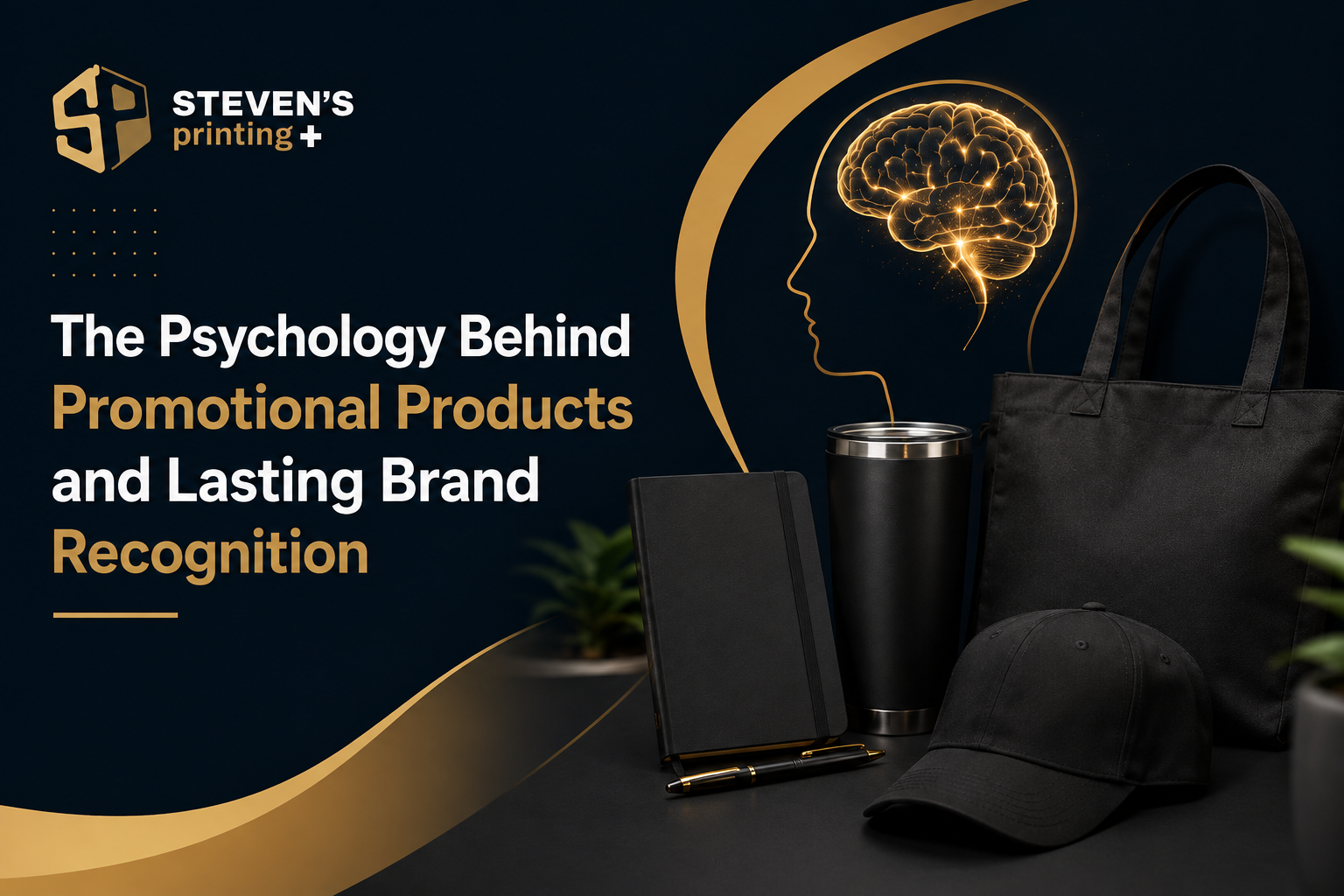
A coffee mug with a company logo. A notebook from a trade show. A branded water bottle sitting on a desk. A tote bag hanging near a doorway. A pen that has somehow survived years of daily use.
Most people don’t think twice about these items. They are simply part of everyday life.
Yet from a marketing perspective, they reveal something fascinating about human behavior.
For all the innovation that has transformed advertising over the past two decades, some of the most effective forms of brand exposure remain surprisingly simple. While businesses continue investing heavily in digital campaigns, social media strategies, video advertising, and search marketing, promotional products have quietly maintained a level of influence that many modern marketers underestimate.
The reason has less to do with marketing and more to do with psychology.
People interact with physical objects differently than they interact with advertisements.
An advertisement asks for attention.
A useful product earns a place in someone’s life.
That distinction may explain why promotional products continue to play such an important role in building brand recognition, customer relationships, and long-term business visibility.
Why Physical Objects Create Stronger Memories
Human beings are naturally wired to remember experiences that involve physical interaction.
Long before smartphones, websites, and social media platforms existed, people learned about the world through touch, movement, and direct experience. While technology has transformed how information is delivered, the human brain still processes physical experiences in unique ways.
Think about the difference between seeing a photo of a product online and holding that product in your hands. The second experience typically feels more memorable because multiple senses are involved.
The same principle applies to branding.
A digital advertisement may be viewed for a few seconds before disappearing. A promotional product creates repeated physical interactions over days, months, or even years. Every use becomes another reminder of the brand associated with that item.
This repeated exposure matters because memory is rarely built through a single encounter. Most lasting impressions develop through familiarity. The more often people interact with something, the more recognizable it becomes.
That is one reason promotional products continue to generate value long after they are distributed. Their impact extends far beyond the moment they are received.
The Power of Utility Over Interruption
One of the biggest challenges in modern advertising is that consumers have become highly skilled at avoiding it.
People skip commercials.
Scroll past advertisements.
Delete promotional emails.
Install ad blockers.
Filter marketing messages without even realizing they are doing it.
This behavior is not necessarily a rejection of brands. It is often a response to interruption.
Consumers are constantly being asked for attention, and over time they have developed habits that help them manage the overwhelming volume of information competing for their focus.
Promotional products operate under a completely different dynamic.
Instead of interrupting someone’s day, they become part of it.
A notebook helps organize ideas.
A reusable water bottle serves a practical purpose.
A calendar provides daily utility.
A tote bag makes carrying items easier.
In each case, the product contributes value before asking for anything in return.
This subtle difference changes the entire relationship between the brand and the recipient. Rather than being viewed as another company seeking attention, the brand becomes associated with something useful.
And usefulness creates positive impressions that traditional advertising often struggles to achieve.
Why Ownership Changes Perception
There is another psychological principle that helps explain the effectiveness of promotional products: people tend to place greater value on things they own.
Behavioral economists have studied this phenomenon for years. Once an object becomes part of someone’s daily environment, it often feels more meaningful than it did before ownership occurred.
This effect may seem small, but its implications for branding are significant.
A promotional product is not simply viewed.
It is possessed.
It occupies space in a person’s home, office, vehicle, or routine.
Over time, the branded item becomes familiar, and the company associated with it often benefits from that familiarity.
This helps explain why a simple branded item can create lasting brand awareness despite costing far less than many traditional advertising campaigns.
The value is not contained in a single impression. It is created through ongoing presence.
Every glance at a desk accessory. Every sip from a branded tumbler. Every note written in a customized notebook contributes to a growing sense of recognition.
The product becomes a quiet but consistent ambassador for the brand behind it.
From Giveaways to Conversations
The most successful promotional products do more than display a logo.
They create opportunities for interaction.
Consider how often people ask questions about products they see others using.
Where did you get that water bottle?
That’s a nice notebook.
I like that backpack.
Simple conversations like these happen every day, often without any marketing intention whatsoever.
Yet each interaction creates additional exposure for the brand.
Unlike traditional advertising, which communicates in one direction, promotional products can encourage organic conversations between people. Recommendations, referrals, and discussions frequently emerge from everyday experiences with useful products.
This form of exposure is particularly valuable because it carries a level of credibility that advertisements cannot easily replicate.
People trust people.
When a branded item becomes part of a conversation, the brand gains visibility through a more authentic channel than many paid advertising methods can provide.
Why Major Brands Continue Investing in Promotional Products
Despite living in one of the most technologically advanced marketing environments in history, some of the world’s largest companies continue investing heavily in branded merchandise and promotional products.
This is not because they lack access to digital channels.
It is because they understand the value of physical presence.
Digital marketing is excellent at creating immediate visibility. Promotional products excel at creating lasting visibility.
A social media campaign may run for several weeks.
A well-designed promotional product may remain in use for several years.
The cumulative effect can be substantial. One useful item may generate hundreds or even thousands of brand impressions throughout its lifespan. More importantly, those impressions often occur in environments where the recipient feels comfortable and receptive rather than distracted or overwhelmed.
For brands seeking long-term recognition, this type of consistent exposure can be incredibly valuable.
Building Recognition That Lasts
Brand recognition is often discussed as though it is created through major advertising campaigns and large marketing budgets.
In reality, recognition is usually built through repetition.
The brands people remember are often the brands they encounter consistently over time.
Promotional products contribute to this process in a uniquely effective way because they integrate into daily life rather than competing against it. They remain visible without demanding attention. They create familiarity without feeling intrusive. They strengthen awareness through usefulness rather than interruption.
That combination is increasingly rare in modern marketing.
As businesses continue searching for new ways to connect with audiences, the fundamental lesson behind promotional products remains remarkably relevant. People may forget advertisements they saw last week. They may not remember an email they opened yesterday.
But a product they use every morning can keep a brand present for years.
And in a marketplace where recognition often determines who earns trust, who receives consideration, and who ultimately wins business, that kind of lasting presence is difficult to ignore.
The most effective marketing does not always shout the loudest. Sometimes it sits quietly on a desk, becomes part of a routine, and earns a place in someone’s everyday life. When that happens, brand recognition stops being a marketing objective and starts becoming a natural outcome of human behavior.