
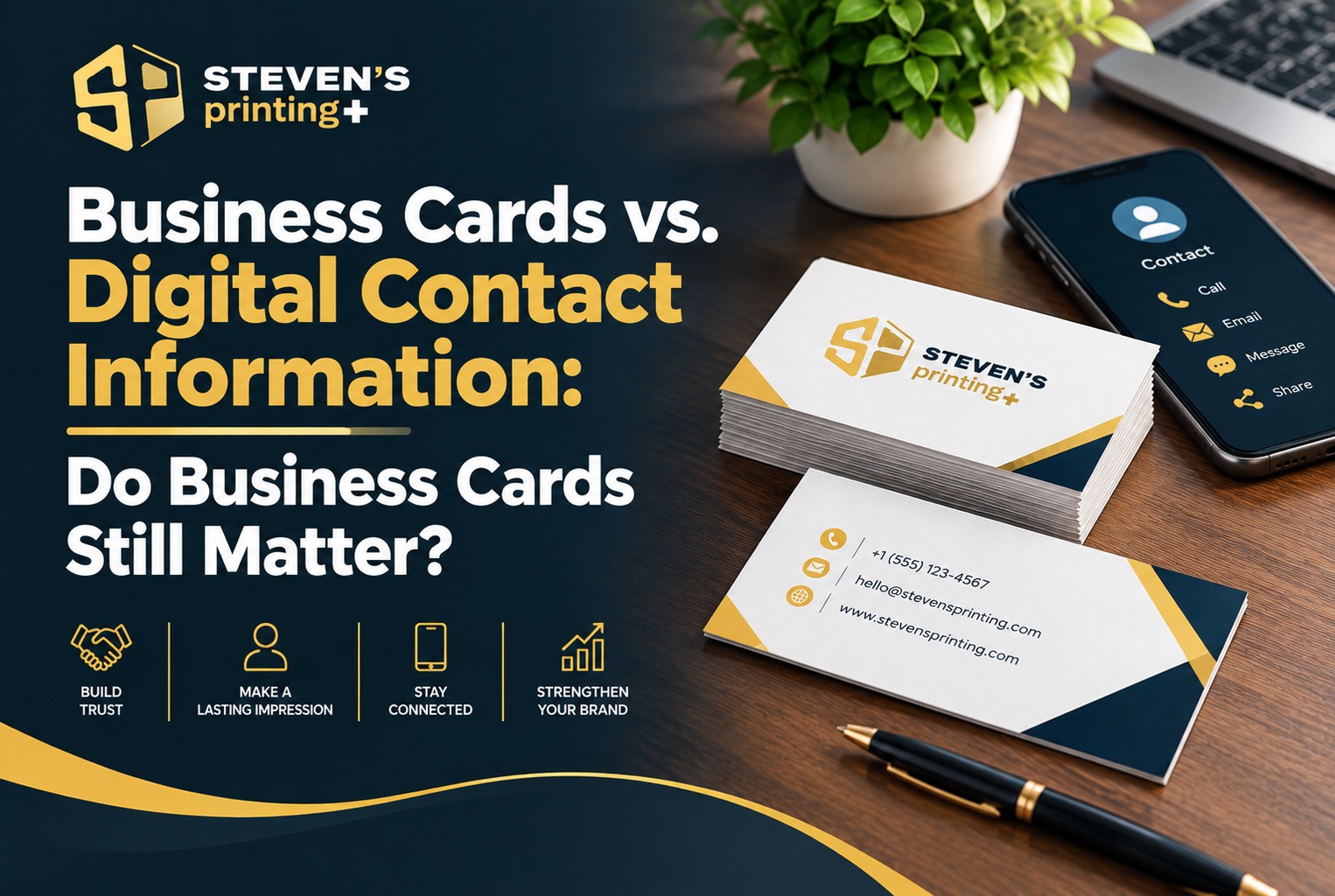
In a world where smartphones are always within reach, it is easy to assume that traditional business cards have become unnecessary. People can exchange phone numbers in seconds, connect on LinkedIn, scan QR codes, send contact details through email, and save information directly to their devices. With so many digital options available, many business owners and professionals naturally ask an important question: Do business cards still matter?
The answer is yes, although the role of the business card has changed.
Business cards are no longer the only way to share contact information, but they continue to offer something that digital communication cannot completely replace: a physical, personal connection. A well-designed card can create a memorable first impression, reinforce your brand, and give someone a simple way to remember who you are after a conversation ends.
At the same time, digital contact information has made networking faster and more convenient than ever. Instead of choosing one over the other, many successful professionals are finding that the best approach is to understand the strengths of both.
Do Business Cards Still Matter in 2026?
This is one of the most common questions people search online, especially as businesses continue moving toward digital communication.
Business cards still matter because face-to-face networking has not disappeared. People continue meeting at conferences, trade shows, networking events, client meetings, local business gatherings, and community events. In these situations, handing someone a business card is often faster and more natural than asking them to unlock their phone, search for an app, and enter your information.
A business card also creates a physical reminder of an interaction. Someone may meet dozens of people at a networking event, receive multiple emails afterward, and connect with several new contacts online. Digital information can quickly disappear into a crowded inbox or an endless list of phone contacts. A physical card, however, can remain on a desk, in a wallet, or near a computer, creating another opportunity for the person to remember your conversation.
This does not mean that traditional cards are more important than digital tools. Instead, they serve a different purpose. Digital contact sharing provides convenience, while a printed card can provide presence and personality.
Are Digital Business Cards Better Than Traditional Business Cards?
Digital business cards have become increasingly popular because they make sharing information simple and immediate. A person can use a QR code, NFC-enabled card, mobile application, or online profile to share their phone number, email address, website, social media accounts, and professional information.
One of the biggest advantages is that digital information can be updated. If your phone number changes or you move to a new office, you can update your online details without throwing away hundreds of outdated cards.
Digital business cards can also provide more information than a traditional card. A standard business card has limited space, while a digital profile can include links to a portfolio, company website, services, videos, testimonials, appointment scheduling tools, and social media platforms.
However, digital sharing is not always perfect.
It depends on technology. The other person may have a low battery, poor internet connection, an incompatible application, or simply may not want to scan a QR code. Some people also prefer not to use their phones during a conversation because it can interrupt the natural flow of a professional interaction.
This is where traditional cards continue to have value. They work instantly without requiring an application, internet connection, or battery.
Why Are Business Cards Important for Professional Networking?
A business card can do much more than provide a name and phone number. When designed properly, it can communicate professionalism and help establish a recognizable brand identity.
Imagine meeting two professionals who offer similar services. One simply tells you to search for them online later. The other gives you a clean, professionally designed card that includes their name, role, contact information, and website. The second interaction often feels more complete because you leave with something tangible.
The quality of the card can also influence perception. The paper, finish, typography, layout, and overall design all contribute to the impression your business creates.
This is one reason businesses continue investing in business printing services even as more communication moves online. Printed materials still play an important role in how companies present themselves during in-person interactions.
A business card does not need to be overly complicated. In many cases, a clean design with clear information is more effective than a card filled with unnecessary graphics or text.
What Information Should Be on a Business Card?
One of the most common searches among new business owners is: What should you put on a business card?
The answer depends on the industry and the purpose of the card, but most professional cards include several basic details:
- Name
- Job title
- Company name
- Phone number
- Email address
- Website
- Business address, when relevant
- Logo or brand identity
Some businesses also include a QR code that directs people to a website, portfolio, online booking page, or digital contact profile.
This creates an effective connection between traditional and modern networking. The person receives something physical while also having the option to access additional information digitally.
Many businesses today use commercial printing for a wide range of materials beyond business cards, allowing them to maintain a consistent appearance across their marketing and communication materials.
Business Cards Create a Stronger First Impression
First impressions matter, particularly when you are meeting potential clients, business partners, or customers for the first time.
A professionally designed business card demonstrates preparation. It shows that you have considered how you want your business to be presented. While a card alone will not determine whether someone chooses to work with you, it can support the professional image you are trying to build.
The design should reflect the nature of your business. A law firm may prefer a simple and sophisticated design, while a creative agency may choose something more visually distinctive. A real estate professional might include branding that reflects the local market, while a photographer may focus on strong visual presentation.
The goal is consistency.
Your business card should feel connected to your website, social media, signage, and other materials. This is where professional print services can be valuable, especially for businesses that want their physical materials to reflect the same level of quality as their digital presence.
Are Business Cards More Memorable Than Digital Contact Information?
In many situations, they can be.
People interact with digital content constantly. Emails, messages, notifications, advertisements, and social media posts compete for attention throughout the day. Contact information saved digitally can easily become forgotten.
A physical object creates a different experience.
When someone receives a business card, they touch it, look at it, and physically carry it with them. A distinctive design may make the interaction easier to remember. For example, someone may later look at the card and immediately remember where they met you and what you discussed.
This is particularly useful for local businesses and professionals who depend heavily on personal relationships.
However, memorability depends on quality and relevance. A poorly designed card with outdated information is unlikely to create a positive impression. Businesses should consider custom business printing when they want materials specifically designed around their brand rather than using generic templates that look similar to everyone else’s.
The Environmental Question: Are Digital Business Cards More Sustainable?
Digital contact sharing does have environmental advantages because it can reduce paper usage and printing waste. Businesses that frequently change their contact information may find digital options especially practical.
However, this does not necessarily mean all printed business cards are environmentally irresponsible.
Businesses can choose recycled paper, responsibly sourced materials, and print only the quantities they actually need. A well-designed card that remains relevant for a long period can also reduce unnecessary waste.
The more important question may be whether the material serves a genuine purpose.
If a company hands out thousands of cards without considering who receives them, many may be discarded. On the other hand, providing a card during meaningful professional conversations can make it a useful communication tool.
The same principle applies to other printed marketing materials. Printing should be intentional and connected to a clear business objective rather than simply producing materials because they have always been used.
Can You Use Both Traditional and Digital Business Cards?
Absolutely, and for many businesses, this is the smartest approach.
You do not have to choose between a traditional business card and digital contact sharing. A printed card can include a QR code that leads directly to your digital profile or website.
This combination provides convenience while maintaining the personal value of a physical card.
For example, you could hand someone a card during a meeting. The card provides your essential contact information immediately, while the QR code gives them access to additional details whenever they are ready.
They might find:
- Your website
- Your service information
- Your portfolio
- Customer reviews
- Social media profiles
- Appointment scheduling
- A downloadable digital contact card
This approach recognizes how people communicate today without completely abandoning traditional networking.
Businesses that regularly communicate with clients in person can also use corporate printing services to create consistent materials for employees, sales teams, events, presentations, and customer interactions.
Why Print Quality Still Matters
Even the best design can lose its impact if the finished product looks poor.
Blurry images, weak colors, difficult-to-read text, and low-quality paper can make a business appear less professional. This is especially important for companies trying to establish trust with new customers.
High-quality printed materials communicate attention to detail. While customers may not consciously analyze the thickness of the paper or the finish of a card, they often notice the overall impression.
Businesses looking for high quality printing should consider factors such as paper stock, finish, color accuracy, readability, and the purpose of the material.
For example, a luxury brand may prefer a heavier card stock with a premium finish, while a company attending a large trade show may need a practical design that can be produced efficiently in larger quantities.
The right choice depends on the audience and how the card will be used.
Should Small Businesses Still Print Business Cards?
Yes, especially if they interact with customers and other professionals in person.
Small businesses often benefit from every networking opportunity. A conversation at a local event, meeting, conference, or community gathering could eventually lead to a new customer or partnership.
A business card makes it easier for people to follow up.
It can also help create consistency for businesses that use other branded business materials, such as brochures, letterheads, presentation folders, postcards, signage, and promotional materials.
For a small business, professional presentation can be particularly important because it helps create confidence. A consistent brand identity can make a smaller company appear organized, established, and prepared.
What Is the Future of Business Cards?
The future is unlikely to be completely digital or completely traditional.
Instead, business cards will probably continue evolving. QR codes, NFC technology, personalized landing pages, and digital contact profiles are already changing the way people exchange information.
Traditional cards can adapt to these changes rather than disappear because of them.
The most effective business card may no longer be simply a piece of paper containing a phone number. It can become a gateway to a larger digital experience while still providing the personal and professional benefits of physical networking.
Companies are also expanding the role of company printing services by using coordinated print materials that support both offline and online marketing efforts.
A customer might receive a printed card, brochure, or promotional piece that directs them toward a website or digital platform. Instead of competing with each other, print and digital marketing can work together.
Final Thoughts: Do Business Cards Still Matter?
Business cards still matter because business relationships are still built by people.
Technology has made communication faster, and digital contact information offers flexibility that traditional cards cannot always provide. At the same time, a business card creates a physical connection and gives people something they can keep after a conversation.
The best strategy is not necessarily to decide whether print is better than digital. Instead, businesses should think about how their customers and professional contacts prefer to communicate.
Digital tools provide speed and convenience. Business cards provide a personal, tangible reminder of your brand. When used together, they can create a stronger and more complete networking experience.
For businesses looking to create professional cards and other printed materials that represent their brand effectively, Steven Printing can help bring those ideas to life with quality printing solutions designed for professional business communication.